Dylan McCavitt

Homeserver

Self-hosted infrastructure and automation


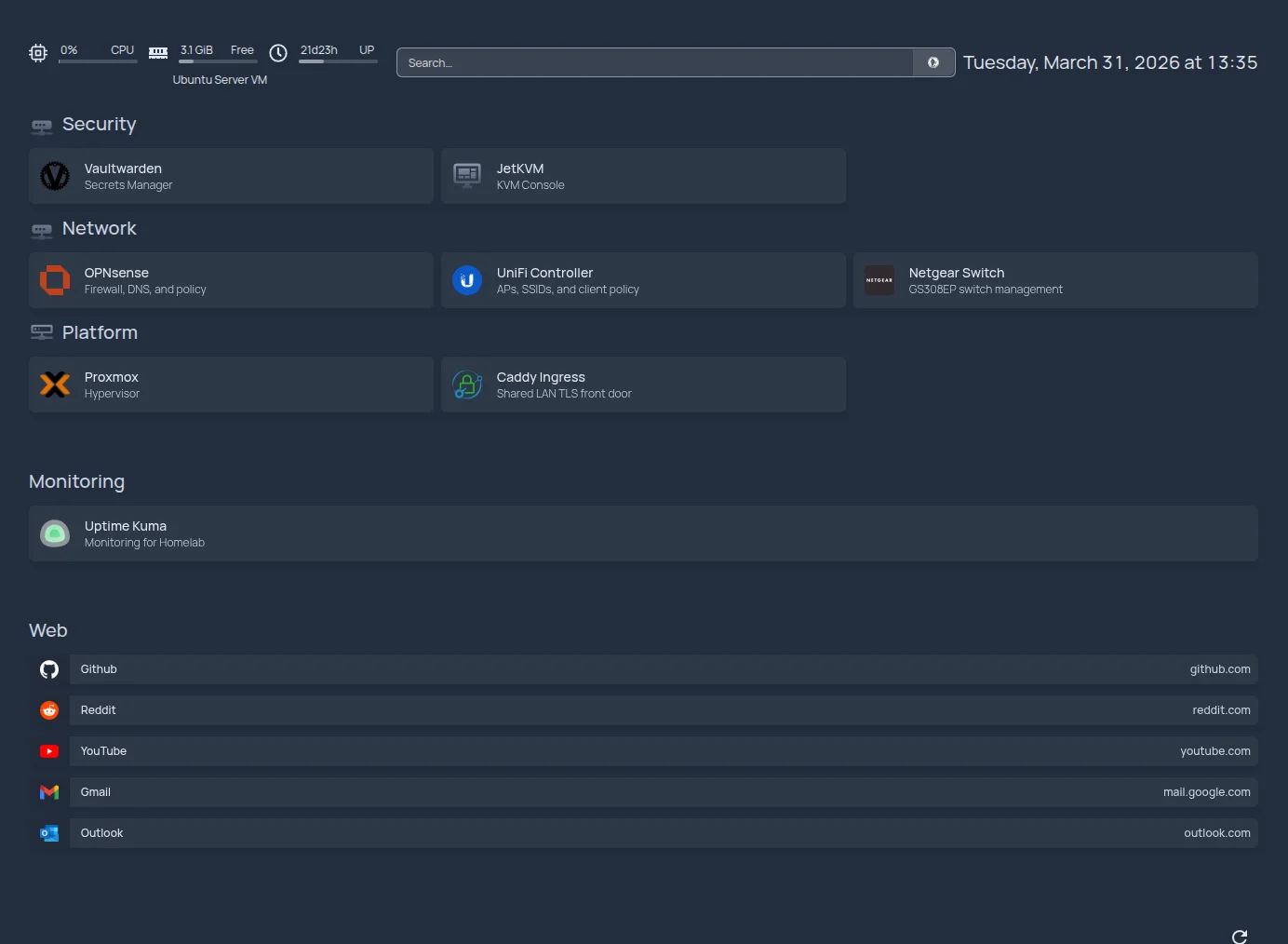
Homepage dashboard

What it is

I run a small server setup at home that handles most things a cloud service usually would: password management, network monitoring, service dashboards, storage, and automated tasks. Everything runs on a single physical server using virtual machines and containers, managed through a firewall that controls what can talk to what.

The system is split into separate zones: one for network management, one for applications people actually use, one for monitoring, and one for automation. This separation means a problem in one area doesn’t cascade into others.

This is a continuous project. The core infrastructure is live and running, but I’m still building it out. Some things in scope: a NAS for dedicated storage, Grafana for visibility, Jellyfin for media and a Tailscale subnet router for remote management access.

Interactive map →

Why I built it

I wanted to understand what cloud services were abstracting away, but I also just wanted more control. Open source tools allow me to build what I want. It’s also just a continuous learning environment. With how fast things move today, there’s always something new to try or improve.

What I learned (and still learning)

To design for failure. It was tempting to rush into adding multiple services, but setting the core infrastructure has set me up for easier scaling in the future. Separation, monitoring, and proper network boundaries means I can add new services later without backtracking and reconfiguring everything that was already working. The boring decisions have definitely been the most valuable. It has also made me appreciate the amount of complexity being handled day to day across massive tech and cloud companies.

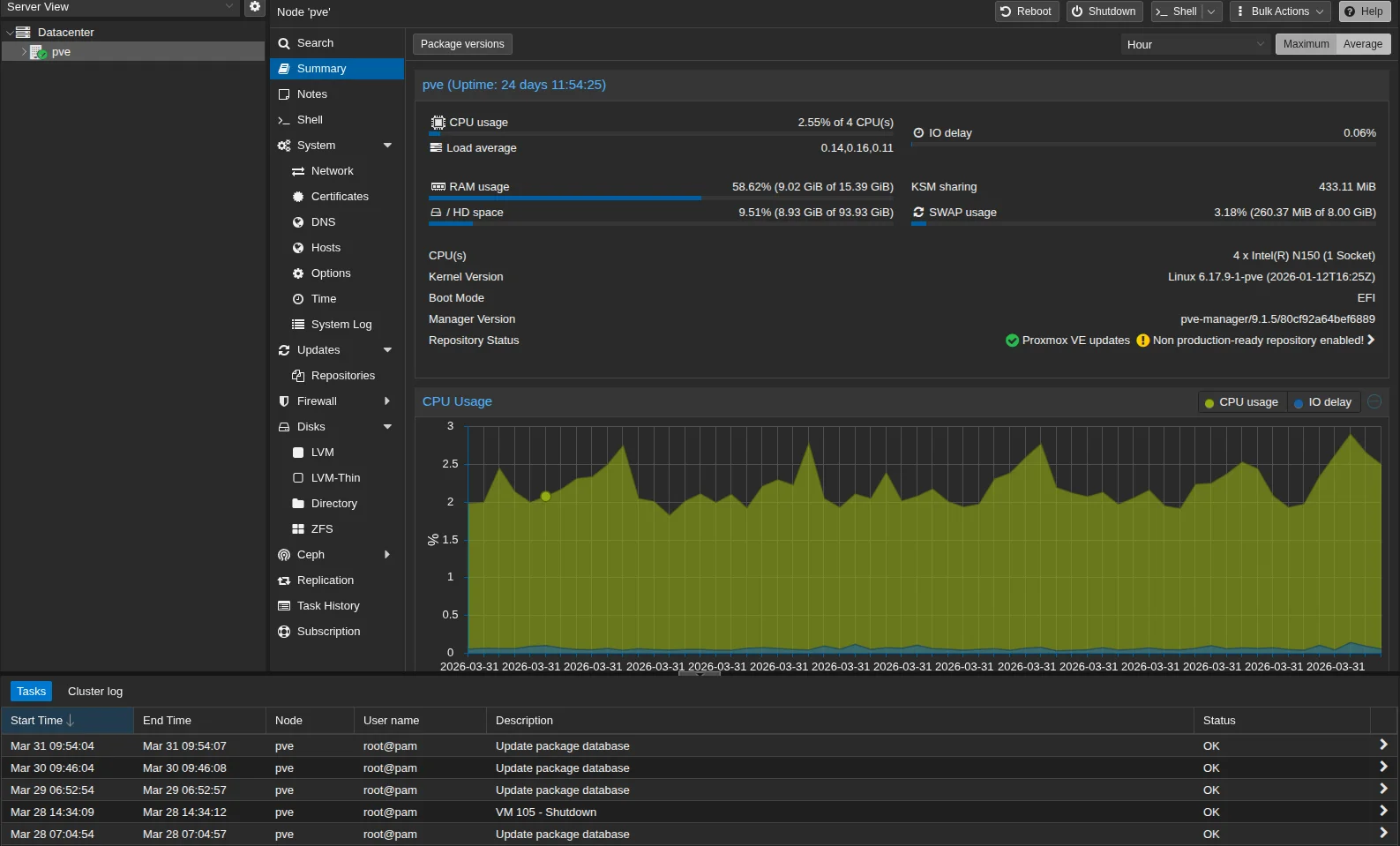
Proxmox dashboard

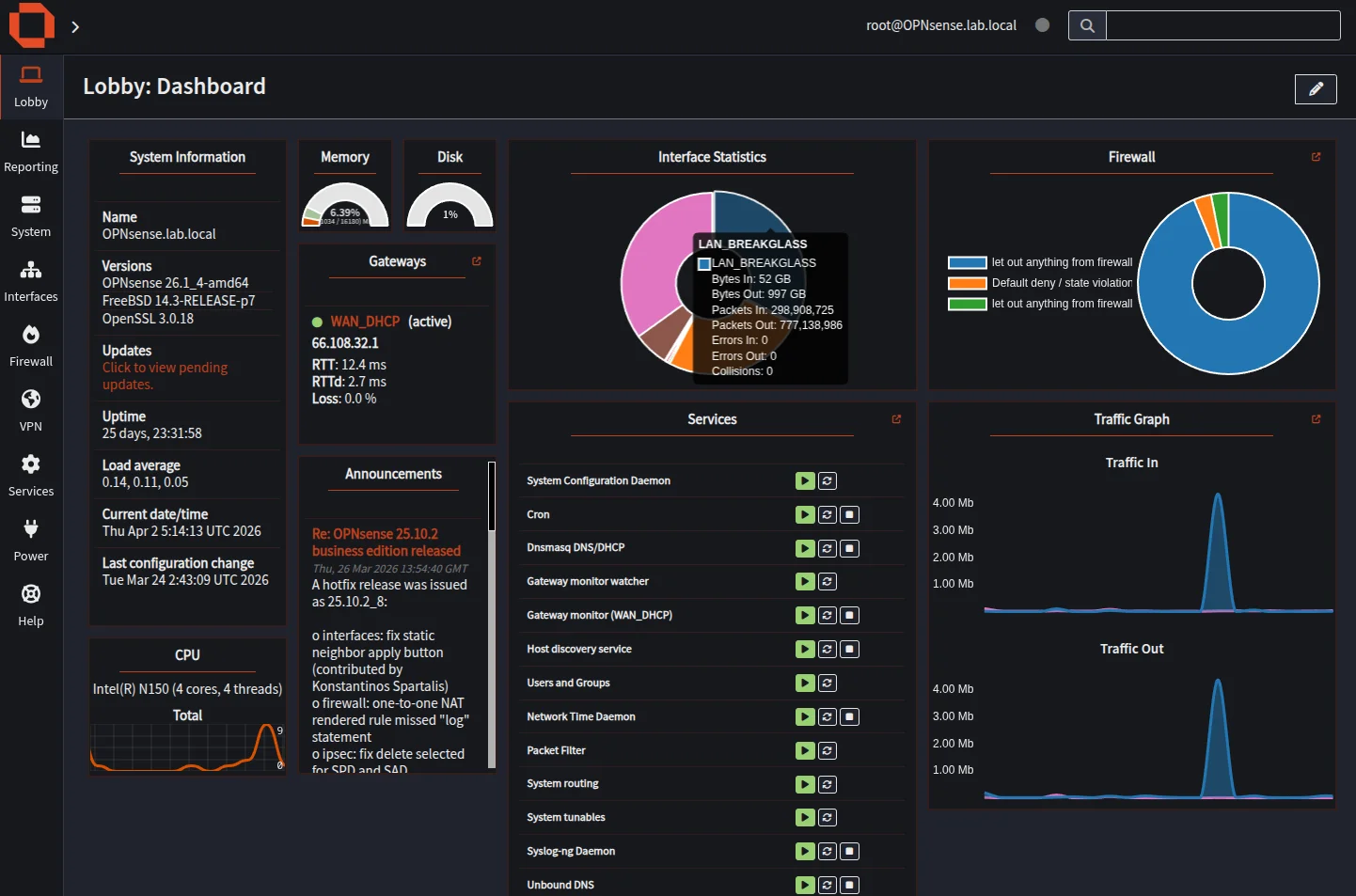
OPNsense firewall

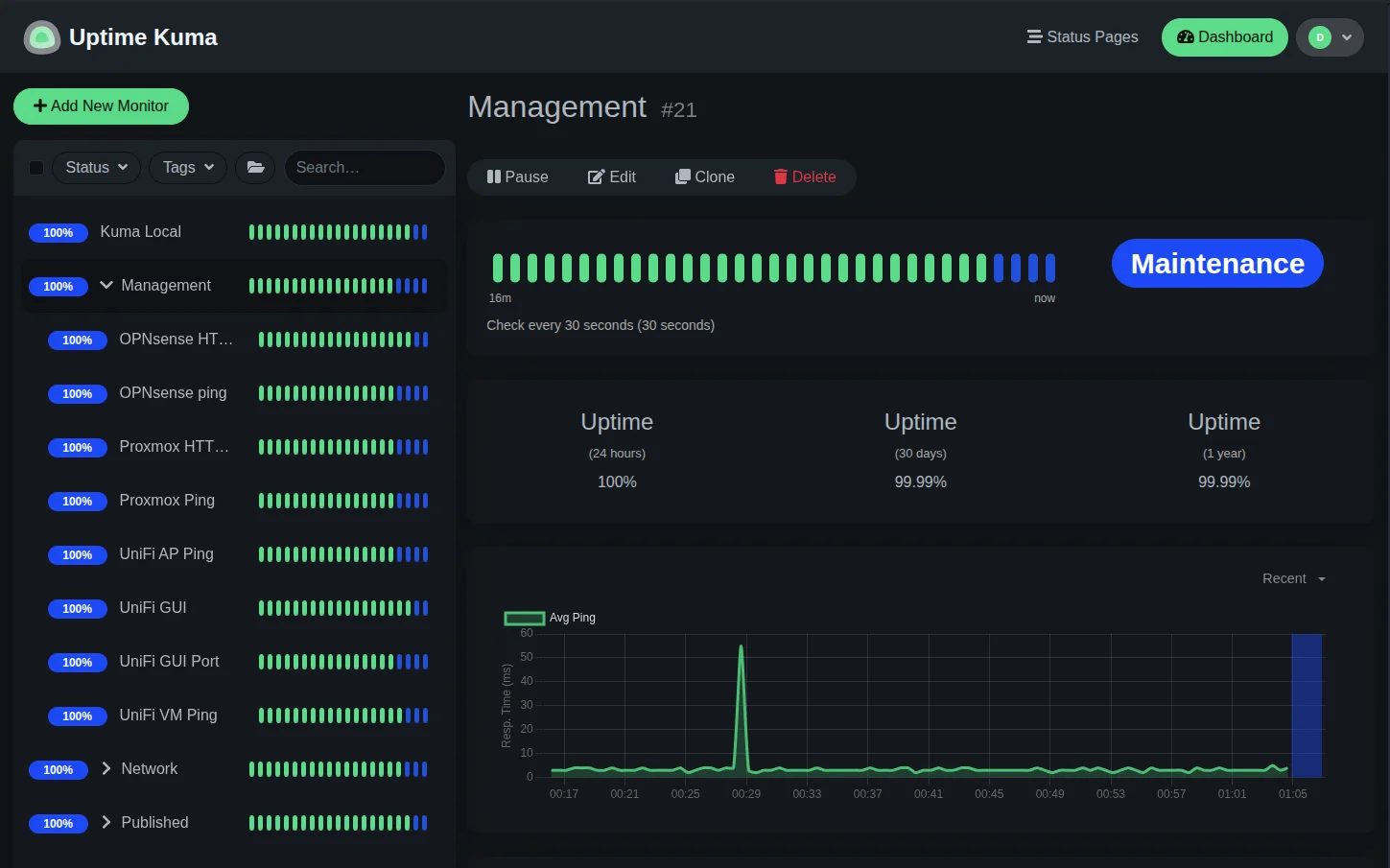
Uptime Kuma monitoring