managing multiple agents & projects
2026-04-17
codex, claude, linear & a little bit of context management and prompting
This is the simplest way that I have been handling multiple agents and projects in parallel.
i.
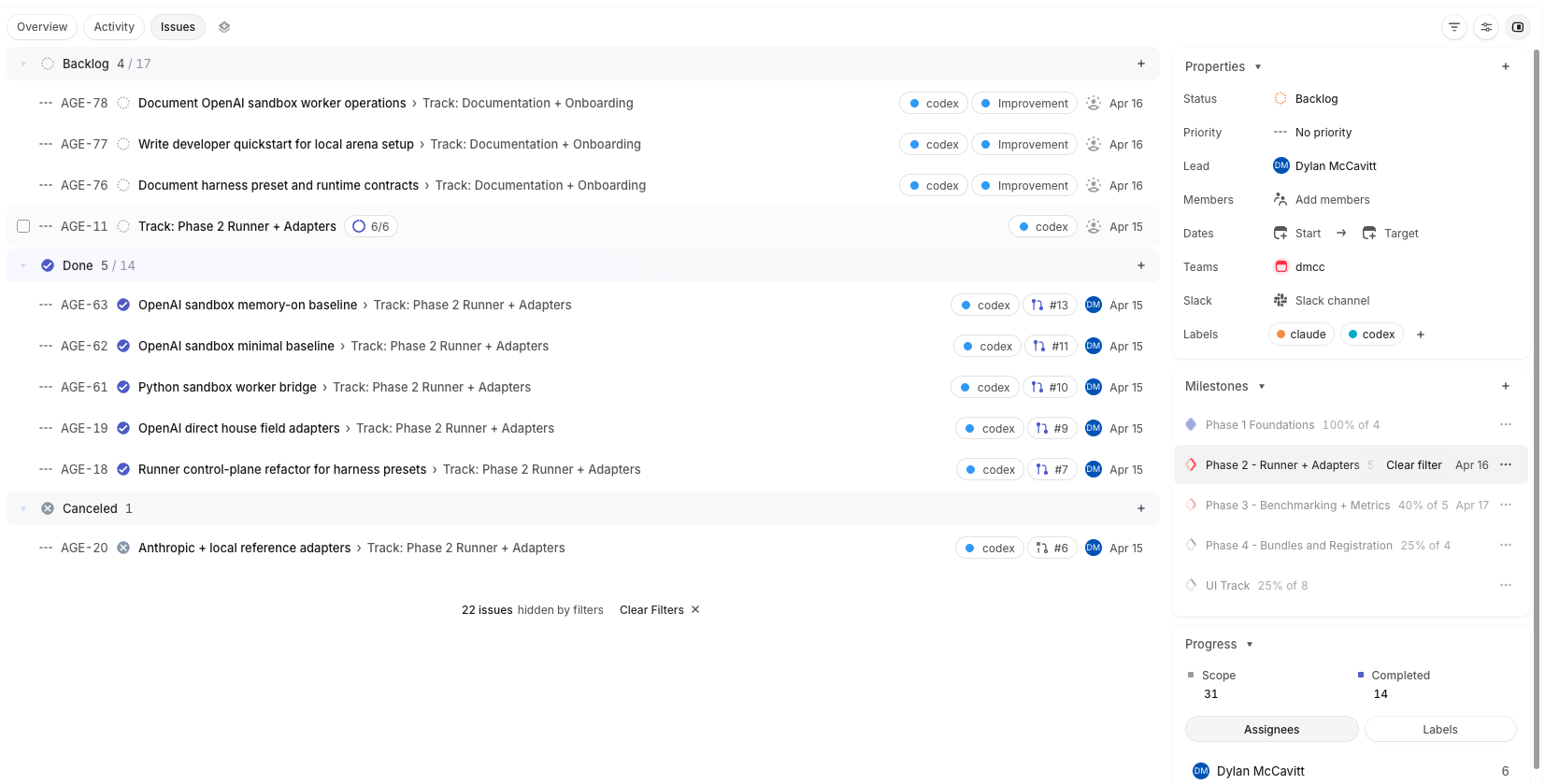
I connect Codex and Claude Code to Linear MCP. Each project gets broken into phases/tracks, and every track gets broken into issues.
ii.
Before I send any issue, it has to be clear enough to execute. I make sure it has scope, constraints, non-goals, acceptance criteria, and a quick test plan. I also use the same issue template every time. That alone cuts down a lot of confusion and rework.
iii.
From there, I delegate work by strengths. In my setup right now, Codex is handling most, if not all, non-UI tasks, while Claude handles UI-heavy tasks. Each issue gets its own worktree and branch for full isolation. I mark dependencies as non-blocking wherever possible so I can run multiple issues in parallel.

iv.
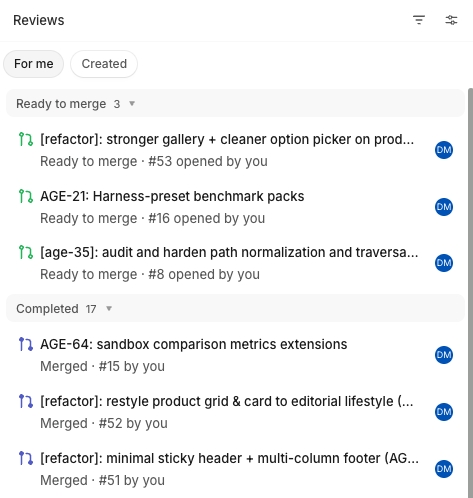
When an agent (or subagent) finishes a task, it opens a PR and links it back to Linear. I tend to keep PRs small (around under ~500 changed lines) so review quality stays high. Then I do the real work: review every changed line, run checks, validate, and either merge or send it back with specific feedback.
v.
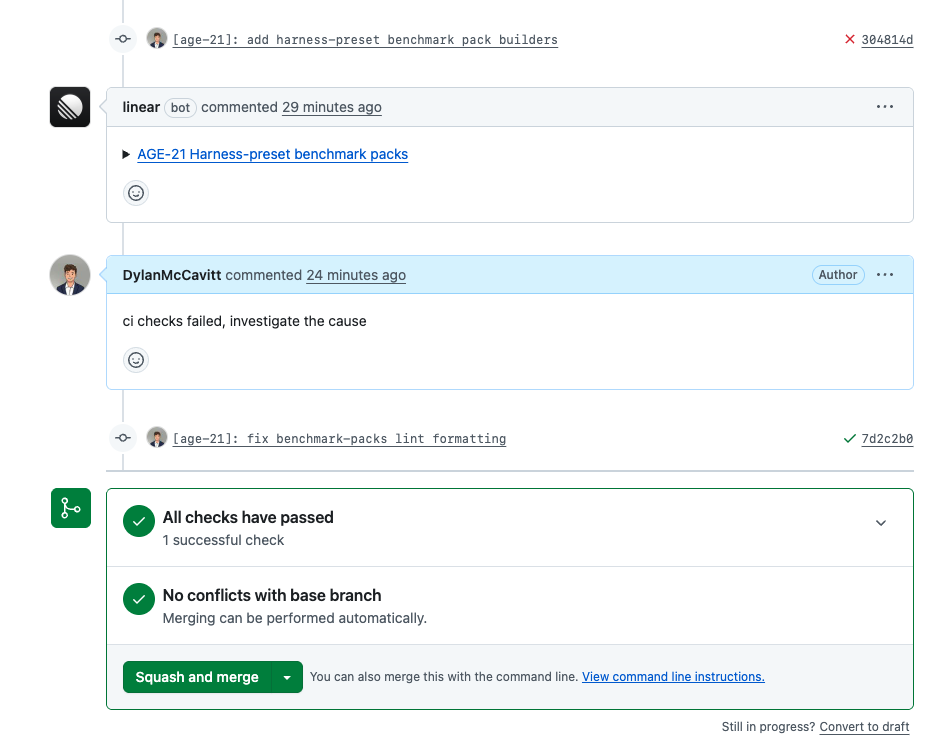
Before anything gets merged, I run typechecks, tests, and lint, then require green CI on latest main. My review is also generally based on risk. So a quicker pass for low-risk changes, and deeper passes for things like auth, data models, migrations, infra, and shared components.
vi.
One of the most important parts of this flow is what happens after an issue is marked done. I started keeping explicit instructions in agent.md, claude.md, and shared skills so everything is consistent across projects. I also reset session between issues unless the next task is small and closely related. Fresh sessions keep context clean and reduce drift.
vii.
Lastly, I treat each returned PR as training data for my process. If something goes wrong, I update prompts/skills so the same mistake is less likely next time. I also started tracking metrics weekly, especially first pass merge rate, so I can see if quality is actually improving.
viii.
This workflow seems tedious, and honestly, parts of it are. But as coding agents keep improving, I’ve found this structure to be worth investing in. I don’t think the goal is to remove human judgment, but to build a repeatable system where speed from agents and quality review can coexist. To me, that feels less like a temporary process and more like the future of being a software engineer.
some workflow metrics
small sample 3-day snapshot (14 merged agent PRs):
- first-pass merge rate: **79%** (11/14)
- rework rate: **21%** (3/14)
- median PR turnaround (opened → merged): **22 minutes**
- parallel throughput: **typically 1–2 issues in parallel, peak 5**